

FinanceEditorially reviewed
BIS General Manager Evaluates Stablecoins and Tokenised Deposits at Jackson Hole
Buzz Insights Desk7 min read
Reviewed by admin-deploy
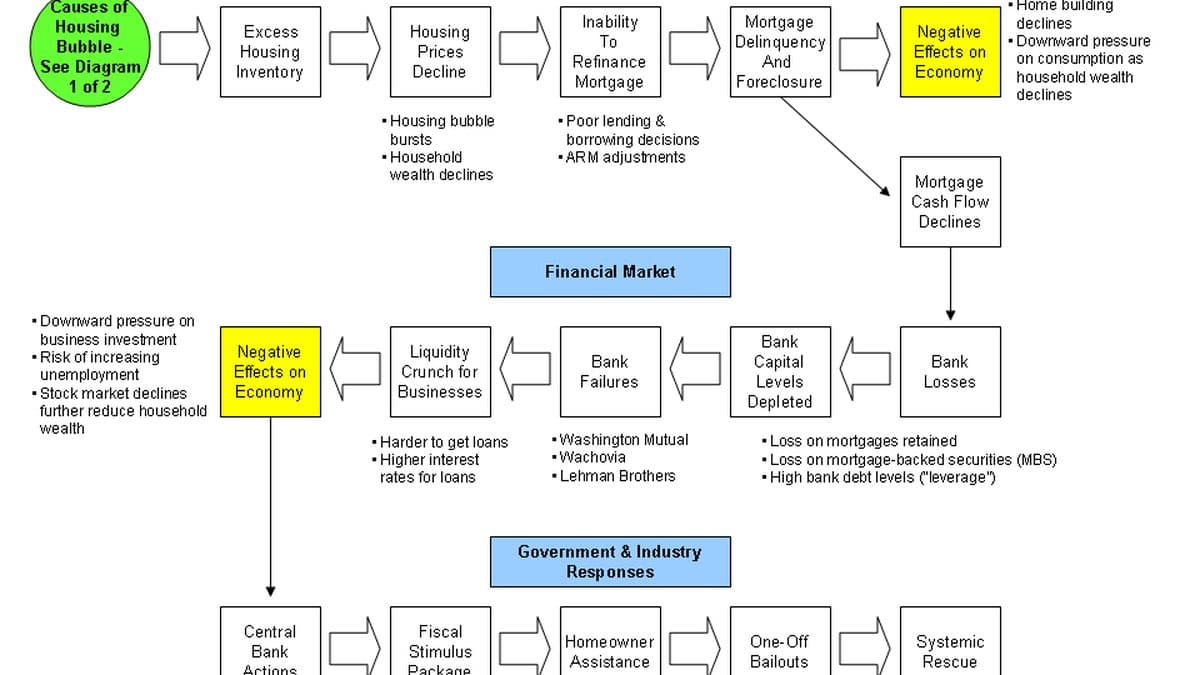
At the Jackson Hole Economic Symposium, BIS General Manager Pablo Hernández de Cos analyzed the monetary properties of stablecoins and tokenised deposits, outlining the structural conditions necessary to preserve trust and financial integr…
The Jackson Hole Debate on Digital Money Architecture
At the annual Jackson Hole Economic Symposium on August 28, 2026, Bank for International Settlements General Manager Pablo Hernández de Cos delivered a detailed presentation on the evolution of money and payment instruments [2][3]. Setting the context in Wyoming, where historic trappers once exchanged beaver pelts and where modern authorities have recently advanced the state-level Frontier Stable Token, de Cos examined whether private stablecoins or commercial bank tokenised deposits provide the appropriate architectural path for advanced economies [3]. The discussion focused on how digital innovation must reinforce rather than dismantle the core foundations that render monetary systems trustworthy and stable [2][3]. While digital ledger technologies offer powerful tools to address existing payment frictions, central bankers emphasized that technological novelty cannot substitute for institutional guarantees [3][8].
Institutional Foundations of a Sound Monetary System
The BIS framework establishes that money is fundamentally an institutional achievement rather than merely a payment technology [2][3]. For money to successfully coordinate broad economic activity at scale, it must be widely accepted without questions asked as the final settlement of obligations across society [3]. This universal acceptance depends on two foundational properties: a common unit of account that standardizes prices, balance sheets, and contracts, alongside the singleness of money, which guarantees that all valid monetary instruments denominated in that currency can be exchanged at par with finality into central bank money [2][3].
Supporting these core properties is the elasticity of liquidity at the system level, which allows the money supply to expand and contract smoothly in response to changing payment demands during normal times and periods of severe market stress [2][3]. When a monetary regime maintains these structural features, it unlocks powerful network effects [3]. These network effects are further compounded across the economy by seamless interoperability among diverse financial platforms and strict financial integrity standards that prevent illicit flows and protect the rule of law [2][3]. In the established two-tier architecture, central bank money provides the sovereign anchor while supervised commercial intermediaries deliver payment services, sparing users the burden of evaluating counterparty pedigree in daily transactions [3].
Structural Comparison of Stablecoins and Tokenised Deposits
To determine which technological path best addresses legacy payment frictions—such as high cross-border costs, limited platform interoperability, and constrained competition—de Cos conducted a comparative evaluation of stablecoins and tokenised deposits [2][3]. Stablecoins are primarily bearer-like digital assets operating across fragmented public blockchains [2]. In practice, stablecoins struggle to consistently satisfy the foundational tests of singleness, interoperability, and integrity [2][8]. Because stablecoins trade on secondary markets, their prices can fluctuate above or below par during periods of liquidity strain, resulting in divergent risk profiles between different tokens [5][8]. Furthermore, their deployment on disparate blockchains requires bridge mechanisms, wrapping, or centralized intermediaries that introduce operational vulnerabilities, while self-custodied wallets present distinct anti-money laundering and compliance hurdles [2][8].
Conversely, tokenised deposits represent programmable, account-based claims issued by regulated commercial banking institutions [2][8]. Under this design, the singleness of money is preserved because interbank transfers ultimately settle in central bank money across permissioned networks [2][8]. Know-your-customer compliance is embedded directly at the user interface, ensuring alignment with legal frameworks and maintaining the established two-tier monetary structure [2][8]. By anchoring transactions directly to central bank reserves, tokenised deposits eliminate secondary market price discounts and offer a more robust foundation for wholesale and retail settlement [2][3].
Macrofinancial Channels and Regulatory Safeguards
The BIS presentation highlighted the broader balance sheet, bank lending, and fiscal space implications associated with widespread stablecoin adoption [2]. Large-scale migration of deposits into private stablecoins alters bank funding structures by draining traditional retail deposits and potentially raising marginal bank funding costs [2][8]. Concurrently, large reserve allocations into government securities by stablecoin issuers can affect Treasury market liquidity and sovereign borrowing dynamics [2][8].
To mitigate these systemic risks, central bank authorities have outlined three core sets of questions regarding existing stablecoin models: par redeemability and liquidity elasticity, cross-platform interoperability and settlement finality, and institutional integrity paired with clear accountability [2]. These concerns are heightened by fragmented international regulatory frameworks [8]. A study by the BIS-linked Financial Stability Institute revealed significant cross-border divergence across major jurisdictions including the United States, the European Union, the United Kingdom, Hong Kong, and Singapore regarding issuer licensing and permissible commercial activities [8]. Furthermore, in the United States, regulatory implementation under the GENIUS Act continues to face operational complexity regarding foreign stablecoin due diligence and enforcement deadlines [5][6].
The Coexistence Model and Implementation Realities
Despite structural reservations voiced by central bank officials, private sector entities and global banking consortia continue to actively develop stablecoin ventures on public chains alongside proprietary tokenisation initiatives [5]. BIS leadership acknowledged that stablecoins and tokenised deposits are likely to coexist in the intermediate term, provided that comprehensive regulatory safeguards are enforced [5][8]. Under a disciplined coexistence framework, tokenised deposits would manage mainstream wholesale settlement and daily commercial transactions, while stablecoins could serve bounded functions in specialized decentralized finance ecosystems [8].
Realizing an institutional tokenisation architecture nonetheless faces substantial operational hurdles [2]. At present, no fully interoperable, multi-bank cross-border tokenised deposit system operates at commercial scale, and existing market pilots remain largely confined to permissioned platforms or bank-specific tokens [2][8]. Successfully transitioning to a tokenised two-tier monetary system will require international coordination on technical interoperability, governance standards, legal clarity, operational resilience, and smooth integration with legacy clearing infrastructure [2].
Sources
- Pushing the monetary frontier: stablecoins and tokenised deposits www.bis.org
- Pushing the monetary frontier: stablecoins and tokenised deposits | Bank for International Settlements www.bis.org
- At Jackson Hole, the BIS Head Said Stablecoins Fail Every Test of Money. Banks Are Building Them Anyway. – Forkast forkast.news
- US Treasury proposes foreign stablecoin rules for exchanges cryptoslate.com
- Stablecoins fail payment credibility test, BIS says – Chain Grid News chaingridnews.com
Sources and evidence
- 1.
- 2.
- 3.
- 4.US Treasury proposes foreign stablecoin rules for exchanges
cryptoslate.com
- 5.
Related articles

finance
American Economists Hall and Woodford Win 2026 Nobel Prize in Economics
American economists Robert E. Hall and Michael Woodford won the 2026 Nobel Prize in Economics for macroeconomic models helping stabilise economies.
Buzz Insights Desk
2 min read

finance
MoSPI and Pahle India Foundation Sign Data MoU On Oct 8
The National Statistics Office under MoSPI signed an MoU with Pahle India Foundation on October 8, 2026, to enhance official statistics, research, and data analysis.
Buzz Insights Desk
1 min read

finance
MoSPI and Pahle India Foundation Sign MoU on October 8, 2026
The Ministry of Statistics and Programme Implementation signed an MoU with Pahle India Foundation on October 8, 2026, to enhance official data and research.
Buzz Insights Desk
1 min read
finance
Schnabel Details ECB Policy Response to Shocks on September 30, 2026
European Central Bank board member Isabel Schnabel outlines monetary policy responses to overlapping shocks and inflation persistence on September 30, 2026.
Buzz Insights Desk
2 min read
finance
Federal Reserve Board Sets Reserve Balance Rate to 3.90 Percent Effective September 17, 2026
The Federal Reserve Board announced monetary policy implementation decisions, raising the interest rate on reserve balances to 3.90 percent effective September 17, 2026.
Buzz Insights Desk
3 min read
finance
FDIC Schedules September 17, 2026 Board Meeting on Merger Rules and State Bank Parity
The FDIC announced an open board meeting for September 17, 2026, to consider proposed rulemaking on bank merger transactions and state bank parity.
Buzz Insights Desk
4 min read