

FinanceSource-backed
Federal Reserve Board Sets Reserve Balance Rate to 3.90 Percent Effective September 17, 2026
Buzz Insights AI desk5 min read
Substantially updated 17 September 2026 at 8:00 am IST
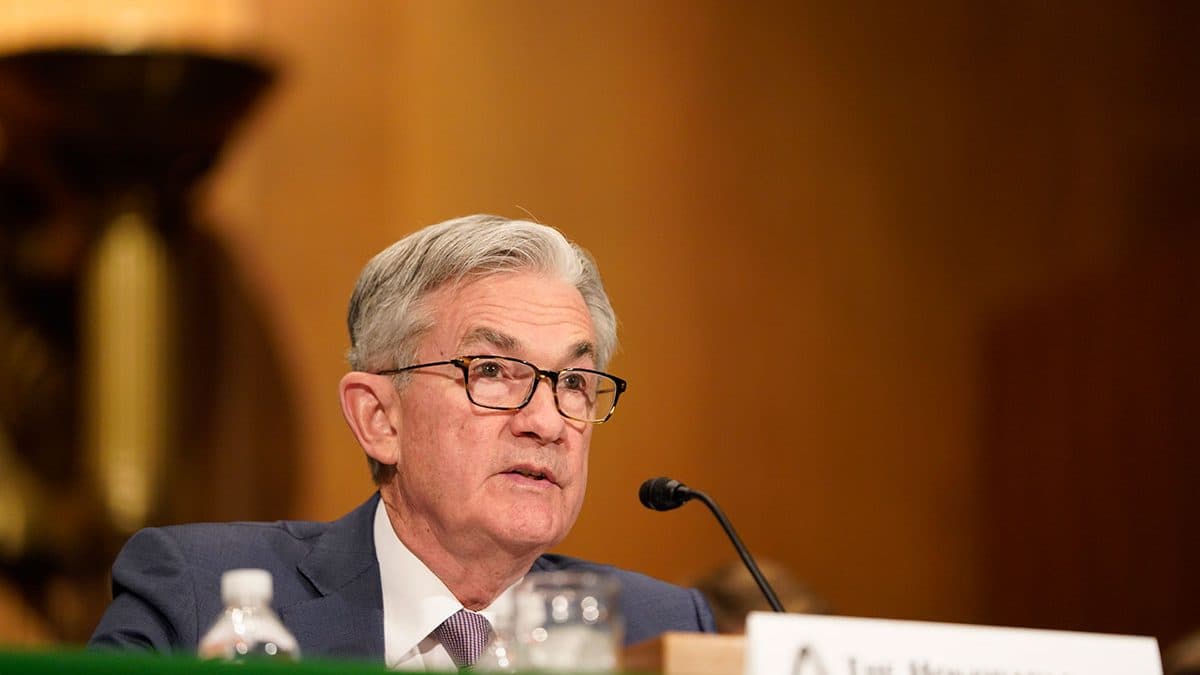
The Federal Reserve Board announced monetary policy implementation decisions, raising the interest rate on reserve balances to 3.90 percent effective September 17, 2026.
What Happened
On September 16, 2026, the Federal Reserve Board issued an implementation note detailing critical decisions regarding the monetary policy stance announced by the Federal Open Market Committee (FOMC) [1]. The Board of Governors voted unanimously to raise the interest rate paid on reserve balances to 3.90 percent, with the change taking effect on September 17, 2026 [1]. This adjustment forms a cornerstone of the central bank's ongoing strategy to manage short-term liquidity and calibrate borrowing costs across financial markets [1].
Alongside this adjustment, the FOMC directed the Open Market Desk at the Federal Reserve Bank of New York to execute specific transactions within the System Open Market Account [1]. These directives include undertaking open market operations as necessary to maintain the federal funds rate within a target range of 3-3/4 to 4 percent starting September 17, 2026 [1]. Furthermore, the central bank set its standing overnight repurchase agreement operations at a rate of 4.0 percent and established standing overnight reverse repurchase agreement operations at an offering rate of 3.75 percent, maintaining a strict per-counterparty limit of $160 billion per day [1].
Policy Mechanics and Operations
The implementation note outlines precise mechanics for managing reserve levels and executing open market transactions to ensure financial stability [1]. The FOMC instructed the Desk to increase System Open Market Account holdings through purchases of Treasury bills and other Treasury securities with remaining maturities of 3 years or less when appropriate to maintain an ample level of reserves [1]. Additionally, the directives require rolling over at auction all principal payments from the Federal Reserve's holdings of Treasury securities, while reinvesting all principal payments from agency securities holdings directly into Treasury bills [1].
In a related action announced alongside the primary directive, the Board of Governors voted unanimously to approve a 1/4 percentage point increase in the primary credit rate, bringing it to 4.0 percent effective September 17, 2026 [1]. These coordinated adjustments reflect the operational framework established by the central bank to manage short-term borrowing costs, influence banking sector liquidity, and uphold its dual mandate objectives under prevailing economic conditions [1].
Why It Matters
The implementation details released by the Federal Reserve establish the operational parameters that directly influence short-term borrowing costs, institutional liquidity, and broader money market conditions [1]. By setting specific rates for reserve balances, overnight repurchase agreements, and the federal funds target range, the central bank provides commercial banks, depository institutions, and financial market participants with clear, predictable benchmarks for liquidity management [1].
The adjustments to the primary credit rate and overnight lending facilities affect the cost of short-term funding across the banking sector, directly shaping credit availability throughout the economy [1]. Furthermore, the detailed instructions regarding Treasury securities holdings and reinvestment policies provide transparency into how the central bank manages its balance sheet adjustments over time [1]. Understanding these operational nuances allows economists, institutional investors, and corporate treasurers to better anticipate shifts in short-term funding markets and adjust their financial planning accordingly [1].
What to Watch
Market participants and financial analysts will closely monitor upcoming operational results from the Open Market Desk at the Federal Reserve Bank of New York to observe how effectively the federal funds rate remains within the established 3-3/4 to 4 percent target range [1]. Key indicators to follow include the daily volume and uptake of overnight repurchase and reverse repurchase agreements, adjustments in aggregate reserve balances across depository institutions, and subsequent FOMC communications regarding future balance sheet operations [1].
Additionally, observers will track incoming economic data releases to evaluate whether future monetary policy adjustments may be warranted. As the central bank continues to roll over Treasury holdings and reinvest principal payments into Treasury bills, tracking these portfolio shifts will provide continuous insight into the evolving liquidity conditions of the financial system [1]. Market watchers should also review related statistical datasets and official institutional reports, such as those concerning broader economic indicators and structural developments in financial sectors [2][3][4], to maintain a comprehensive perspective on macroeconomic trends.
Sources
- Federal Reserve Board - Implementation Note issued September 16, 2026 federalreserve.gov
- AISHE 2023–24: Higher Education Enrolment Grows Across Gender and Social Groups - FACTLY factly.in
- Union Ministry for Education Released Reports of the All India Survey on Higher Education (AISHE): 2022-23 & 2023-24 | Current Affairs | Vision IAS visionias.in
- Analysis of AISHE 2022-23 and 2023-24 data by Arun C Mehta | Education for All in India educationforallinindia.com
Sources and evidence
- 1.Federal Reserve Board - Implementation Note issued September 16, 2026
federalreserve.gov · Primary source
- 2.
- 3.
- 4.Analysis of AISHE 2022-23 and 2023-24 data by Arun C Mehta | Education for All in India
educationforallinindia.com
Related articles

finance
FDIC Schedules September 17, 2026 Board Meeting on Merger Rules and State Bank Parity
The FDIC announced an open board meeting for September 17, 2026, to consider proposed rulemaking on bank merger transactions and state bank parity.
Buzz Insights AI desk
4 min read

finance
St. Louis Fed Details September 15 Economic Release Calendar and Interest Rate Data
The Federal Reserve Economic Data calendar outlines financial data releases for September 15, including interest rates and manufacturing surveys.
Buzz Insights AI desk
3 min read

finance
Federal Reserve Convenes September 2026 Policy Meeting Amid Rate Hike Expectations and Global
The Federal Open Market Committee meets in September 2026 to announce its latest policy decision, dot plot, and economic projections amid shifting market conditions.
Buzz Insights AI desk
3 min read
finance
Federal Reserve Rate Decision and Global Central Bank Schedule for September 14–18, 2026
Global markets eye the Federal Reserve rate decision, economic projections, and multi-bank announcements during the week of September 14–18, 2026.
Buzz Insights AI desk
3 min read

finance
Government Securities Reforms and Sovereign Green Bonds Framework
An exhaustive analysis of government securities reforms for foreign participation and sovereign green bonds issuance frameworks based on official releases.
Buzz Insights AI desk
3 min read

finance
DFS Secretary Shri M. Nagaraju Chairs Financial Inclusion 2.0 Roadmap Meeting on February 11, 2026
Discover the key highlights from the Financial Inclusion 2.0 roadmap meeting chaired by DFS Secretary Shri M. Nagaraju on February 11, 2026.
Buzz Insights AI desk
4 min read