

FinanceEditorially reviewed
First Abu Dhabi Bank and Citi Complete Live USD Tokenized Deposit Transactions on Swift Ledger
Buzz Insights Desk7 min read
Reviewed by admin-deploy
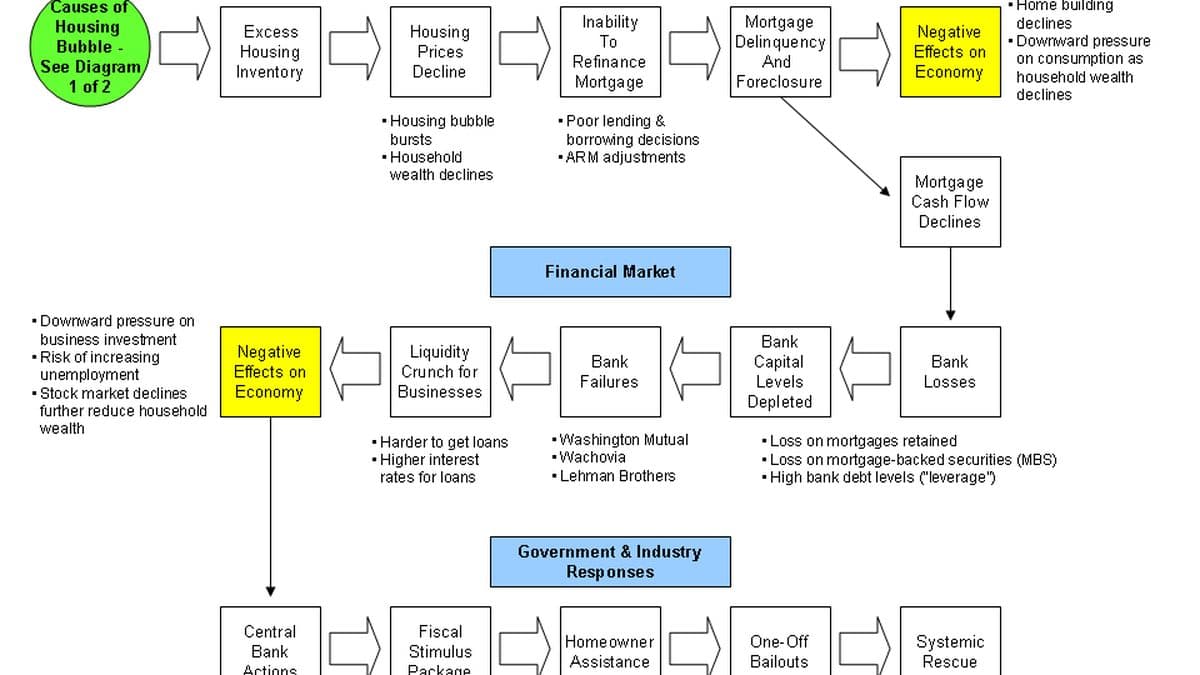
First Abu Dhabi Bank and Citi have completed live U.S. dollar cross-border transactions using tokenized commercial bank deposits and Swift’s shared blockchain ledger.
Milestone Transactions for First Abu Dhabi Bank and Citi
First Abu Dhabi Bank (FAB) has finalized live U.S. dollar transactions with Citi utilizing tokenized commercial bank deposits and Swift’s blockchain-based ledger infrastructure [1]. This operational deployment makes FAB the first bank in the Middle East and Africa region to achieve the milestone as international financial institutions work toward round-the-clock, continuous cross-border payment mechanisms [1]. The operations were conducted under the minimum viable product (MVP) phase of Swift Ledger, establishing practical validation for the end-to-end operational interaction linking conventional Swift financial messaging, tokenized commercial bank deposits, smart contracts, and distributed ledger systems [1].
Alongside its engagement in the Middle East with FAB, Citi confirmed that it processed live native transactions with Singapore’s Oversea-Chinese Banking Corporation (OCBC), marking the first such execution in Southeast Asia [1][6]. Through these operational milestones, Citi became the first United States bank to carry out live native transactions directly on Swift’s ledger platform [1][6]. The financial institutions executed these payments as part of a targeted, controlled proof-of-concept initiative scheduled to run from July through December 2026 [1][6]. The consortium expects to broaden the scope of these operations with additional institutional collaborators later in September, including Singapore-based lenders DBS and United Overseas Bank (UOB) [1][6].
Technical Mechanics: On-Chain Coordination Without Custody Risk
The architectural model deployed by FAB and Citi introduces an important structural distinction when compared with conventional blockchain payment arrangements [1]. In traditional public or unpermissioned distributed ledger environments, digital tokens or native cryptocurrencies often constitute the settlement asset itself [1]. Under the Swift Ledger model, customer deposits remain directly on the participating banks' regulated balance sheets throughout the entire lifecycle of the payment [1].
Within this framework, Swift Ledger functions as an administrative synchronization mechanism that coordinates formal payment commitments and maintains an immutable shared record of corresponding liabilities between institutions [1]. Crucially, Swift Ledger does not assume custody of customer or interbank funds at any stage of the process [1]. Final interbank settlement remains anchored in established correspondent-banking channels or alternative approved institutional settlement arrangements [1]. FAB noted that this mechanism demonstrates how regulated commercial bank money can successfully deliver the key benefits associated with modern distributed ledgers—such as programmability and 24/7 operational availability—without compelling institutions to bypass established compliance frameworks, liquidity controls, or regulatory risk-management standards [1].
Citi Services and the Multi-Bank Digital Asset Strategy
For Citi, processing live transactions on Swift’s distributed ledger represents a central milestone in its broader institutional strategy to deliver always-on, cross-currency, and interoperable payment products to global clients [6]. The project forms a key element of the digital asset agenda within Citi’s Services business, aiming to expand digital capabilities across institutional cash management, securities, and trade [6].
The ledger integration complements several existing infrastructure offerings established by Citi, including its 24/7 USD Clearing solution, Citi Token Services, and Citi Custody+ [6]. These integrated solutions are engineered to support real-time, multi-bank cross-border money movement as well as collateral and securities management for corporate and institutional entities [6]. To date, Citi’s 24/7 USD Clearing service supports more than 300 institutional banking clients globally, while Citi Token Services processes approximately $1 billion in transaction volume across its proprietary blockchain platform [6].
Debopama Sen, Head of Payments within Citi’s Services business, emphasized the significance of establishing interoperability between traditional clearing infrastructure and shared ledger environments [6]. Sen stated that the pilot is a critical step in testing how shared ledger technology can yield an interoperable, efficient, and continuous global financial framework capable of supporting payments alongside dynamic collateral movement, while ensuring institutional client interests guide the design of the Swift ledger MVP [6].
Overcoming Friction and Network Fragmentation
A primary motivation driving the Swift Ledger initiative is the mitigation of network fragmentation across the global digital finance landscape [1]. Over recent years, numerous individual commercial banks and clearing houses have engineered isolated blockchain platforms, proprietary tokenized deposits, and localized digital asset systems [1]. However, because these proprietary platforms operate on disparate architectures, they frequently lack native technical mechanisms to communicate or exchange value with one another [1].
This lack of widespread technical interoperability threatens to divide global finance into disconnected digital silos, or "islands" [1]. In such a segregated environment, capital might move instantly within a closed internal network, yet face severe latency, friction, and operational bottlenecks whenever a transaction must cross into an external banking network, a different distributed ledger, or a foreign regulatory jurisdiction [1].
To counter this risk, Swift is structuring its ledger as a neutral orchestration layer connecting diverse bank platforms [1]. The cooperative's infrastructure enables member banks to synchronize obligations and coordinate bank-issued tokenized deposits across disparate internal systems, including overnight hours and weekends, while relying on trusted payment rails for final interbank resolution [1][6]. Rather than warehousing deposits, the ledger synchronizes commitments and generates a shared, verifiable view of obligations prior to settlement, eliminating the operational constraints of traditional market cut-offs [1][6].
Pilot Trajectory and Future Testing
The initial live transfers executed by FAB and OCBC with Citi validate that shared ledger technology can function without being restricted by conventional interbank cut-off times or weekend clearing closures [1][6]. By proving that existing Swift payment messaging standards can seamlessly interface with smart contracts and tokenized liabilities, the participating institutions have verified a working pathway for regulated commercial banks to modernize wholesale payments [1].
As the controlled proof-of-concept phase advances toward its scheduled conclusion in December 2026, additional regional institutions will join the operational environment [1][6]. The upcoming participation of DBS and UOB will further evaluate how multi-bank tokenized deposit networks behave under diverse liquidity, settlement, and cross-border regulatory demands [1][6]. Through these ongoing deployments, Swift and its collaborator banks seek to validate a scalable foundation where regulated bank money can move globally on a 24/7 basis without sacrificing institutional safety [1][6].
Sources
Sources and evidence
- 1.
- 2.
Related articles

finance
American Economists Hall and Woodford Win 2026 Nobel Prize in Economics
American economists Robert E. Hall and Michael Woodford won the 2026 Nobel Prize in Economics for macroeconomic models helping stabilise economies.
Buzz Insights Desk
2 min read
finance
MoSPI and Pahle India Foundation Sign Data MoU On Oct 8
The National Statistics Office under MoSPI signed an MoU with Pahle India Foundation on October 8, 2026, to enhance official statistics, research, and data analysis.
Buzz Insights Desk
1 min read
finance
MoSPI and Pahle India Foundation Sign MoU on October 8, 2026
The Ministry of Statistics and Programme Implementation signed an MoU with Pahle India Foundation on October 8, 2026, to enhance official data and research.
Buzz Insights Desk
1 min read
finance
Schnabel Details ECB Policy Response to Shocks on September 30, 2026
European Central Bank board member Isabel Schnabel outlines monetary policy responses to overlapping shocks and inflation persistence on September 30, 2026.
Buzz Insights Desk
2 min read

finance
Federal Reserve Board Sets Reserve Balance Rate to 3.90 Percent Effective September 17, 2026
The Federal Reserve Board announced monetary policy implementation decisions, raising the interest rate on reserve balances to 3.90 percent effective September 17, 2026.
Buzz Insights Desk
3 min read
finance
FDIC Schedules September 17, 2026 Board Meeting on Merger Rules and State Bank Parity
The FDIC announced an open board meeting for September 17, 2026, to consider proposed rulemaking on bank merger transactions and state bank parity.
Buzz Insights Desk
4 min read