

FinanceSource-backed
July Core PCE Holds at 3.3% as Services Keep Yields Elevated
Buzz Insights Desk5 min read
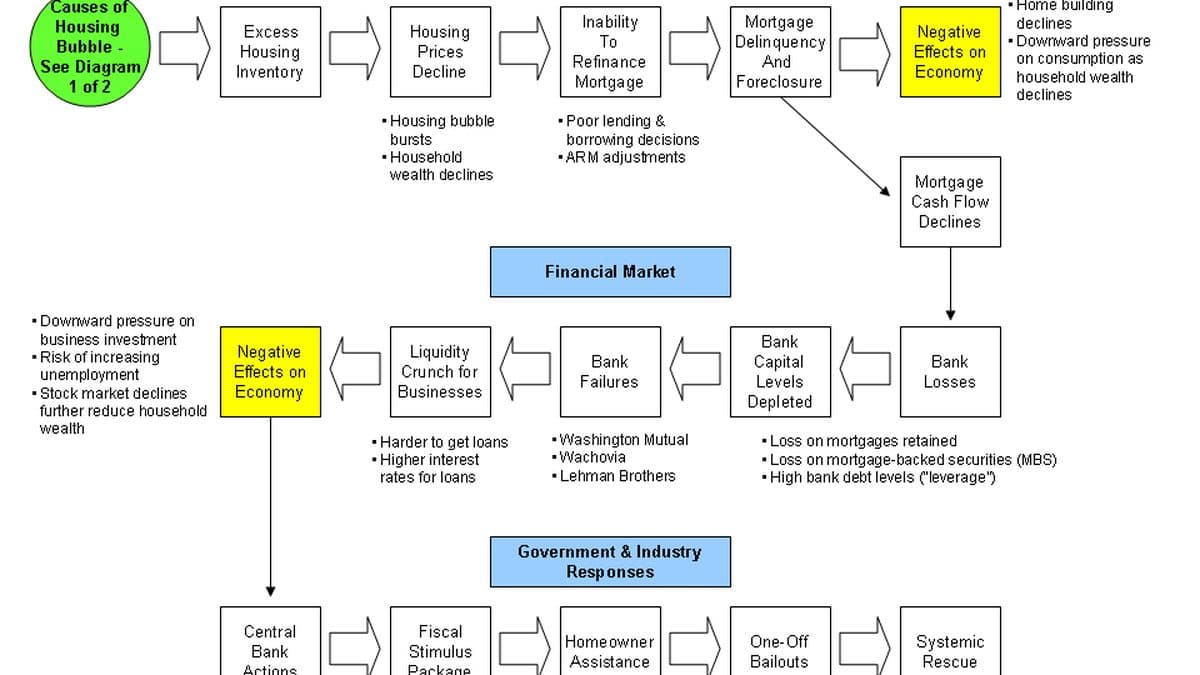
Annual core PCE held at 3.3% in July as stubborn services offset falling goods prices, keeping pressure on long-term Treasury yields.
Key points
- The core personal consumption expenditures price index rose 0.2% in July and remained flat at 3.3% year over year.[1][2][6]
- Overall PCE increased 0.2% month over month and 3.7% annually, exceeding consensus forecasts by 0.1 percentage point.[1][5]
- A 0.1% decline in goods prices was offset by a 0.3% increase in services prices, driven by housing, utilities, and financial services.[1][2][5]
- Long-term Treasury yields remain near multi-year highs despite a planned increase in debt buybacks by the Treasury Department.[1][2]
Headline vs. Core Inflation in the July Report
The Commerce Department's Bureau of Economic Analysis reported that headline personal consumption expenditures (PCE) increased 0.2% on a seasonally adjusted basis in July, bringing the annual inflation rate to 3.7%. Both figures came in 0.1 percentage point higher than the Dow Jones consensus estimate, matching June's annual pace.[2][5][6]
Core PCE, which excludes food and energy prices and serves as the Federal Reserve's primary gauge for underlying trends, rose 0.2% from June and held steady at 3.3% year over year. While headline CPI eased to 3.4% annually in July, PCE remains higher partly because it gives less weight to cooling rental costs.[2][5][6]
The Divergence Between Goods and Services
The internal composition of July's inflation data reveals a sharp contrast between consumer goods and services. Overall goods prices fell 0.1% for the month, supported by drops in energy and durable goods:[1][5]
- Gasoline and other energy goods fell 2.7% on the month, lowering category spending by $14 billion.
- Furnishings and durable household equipment dropped 0.9%.
- Recreational goods and vehicles spending declined by $13.6 billion, while motor vehicles and parts spending fell $9.4 billion.[1][5]
In contrast, services prices rose 0.3% month over month. Spending on financial services and insurance led the increase with a $24.3 billion monthly rise (a 1.2% price increase), alongside a $23.2 billion gain in healthcare spending and a $16.4 billion gain in housing and utilities.[5][2]
Measurement Revisions Scheduled for August Data
Starting with next month's figures, the Commerce Department plans to adjust how it measures specific service categories. The PCE index has faced upward pressure from its calculation of portfolio management services, where rising equity markets automatically translate into higher measured costs regardless of direct consumer fees.[2]
The index has also captured some business-related software expenditures. Economists anticipate that the forthcoming technical adjustments to these software and financial advice measurements will reduce the annual PCE inflation rate by approximately 0.2 percentage points.[2]
Bond Yields and the Fed's Policy Dilemma
Persistent services inflation complicates the Federal Reserve's target of 2%. At its late July meeting, the central bank held its benchmark rate steady for the fifth consecutive time, though three regional Fed presidents dissented in favor of a quarter-point rate increase. Market pricing reflects roughly a 60% probability of holding rates unchanged at the September 15–16 FOMC meeting.[6][2][4]
Long-term borrowing costs have climbed across the market. Yields on 10-year and 30-year Treasurys reached their highest levels since 2007, driven by persistent inflation and federal debt levels. In response, Treasury Secretary Scott Bessent announced that the Treasury will step up buybacks of 10- to 30-year bonds starting next month to support market stability, though initial market reaction has remained muted.[2]
What to do next
- Review fixed-income allocations and cash balances ahead of the September 15–16 FOMC policy meeting.
- Track the Commerce Department's forthcoming PCE report to assess the impact of revised services measurement methodology on portfolio benchmarks.
Still unconfirmed
- Whether the Commerce Department's measurement changes will lower August PCE inflation by the projected 0.2 percentage points.
- The policy direction Fed Chair Kevin Warsh will signal during his upcoming Jackson Hole address.
- Whether the Treasury's doubled buyback program will meaningfully compress 10-year and 30-year bond yields.
Sources
- Fed’s preferred inflation gauge shows core prices rose 3.3% annually in July — feds preferred inflation gauge shows core prices rose 3point3percent annually in july.html cnbc.com · 2026-08-26
- US iflation remains elevated with conflict in Iran ongoing and new trade fights emerging | AP News apnews.com · 2026-08-26
- Fed’s preferred inflation gauge shows core prices rose 3.3% annually in July — fedas preferred inflation gauge shows core prices rose 3 point 3 percent annually in july.html cnbc.com · 2026-08-26
- US economy slows, yet Americans still spending in face of inflation | AP News apnews.com · 2026-07-30
- Annual core inflation climbed by 3.3% in July - UPI.com upi.com · 2026-08-26
- Fed’s preferred inflation gauge remains flat at 3.7 percent in July thehill.com · 2026-08-26
Sources and evidence
- 1.
- 2.
- 3.
- 4.
- 5.
- 6.
Related articles

finance
American Economists Win 2026 Nobel Prize in Economics on Oct. 12
American economists Robert E. Hall and Michael Woodford won the 2026 Nobel Prize in Economics on October 12 for foundational macroeconomic models.
Buzz Insights Desk
2 min read
finance
MoSPI Reports India September 2026 CPI Inflation at 5.54%
The Ministry of Statistics and Programme Implementation reported India's September 2026 retail inflation rate at 5.54% based on the Consumer Price Index.
Buzz Insights Desk
2 min read

finance
American Economists Hall and Woodford Win 2026 Nobel Prize in Economics
American economists Robert E. Hall and Michael Woodford won the 2026 Nobel Prize in Economics for macroeconomic models helping stabilise economies.
Buzz Insights Desk
2 min read
finance
MoSPI and Pahle India Foundation Sign Data MoU On Oct 8
The National Statistics Office under MoSPI signed an MoU with Pahle India Foundation on October 8, 2026, to enhance official statistics, research, and data analysis.
Buzz Insights Desk
1 min read

finance
MoSPI and Pahle India Foundation Sign MoU on October 8, 2026
The Ministry of Statistics and Programme Implementation signed an MoU with Pahle India Foundation on October 8, 2026, to enhance official data and research.
Buzz Insights Desk
1 min read
finance
Schnabel Details ECB Policy Response to Shocks on September 30, 2026
European Central Bank board member Isabel Schnabel outlines monetary policy responses to overlapping shocks and inflation persistence on September 30, 2026.
Buzz Insights Desk
2 min read