

TechnologyEditorially reviewed
DiDi Autonomous Driving Launches Fully Driverless Service Trials of Next-Generation R2 Robotaxi
Buzz Insights Desk6 min read
Reviewed by admin-deploy
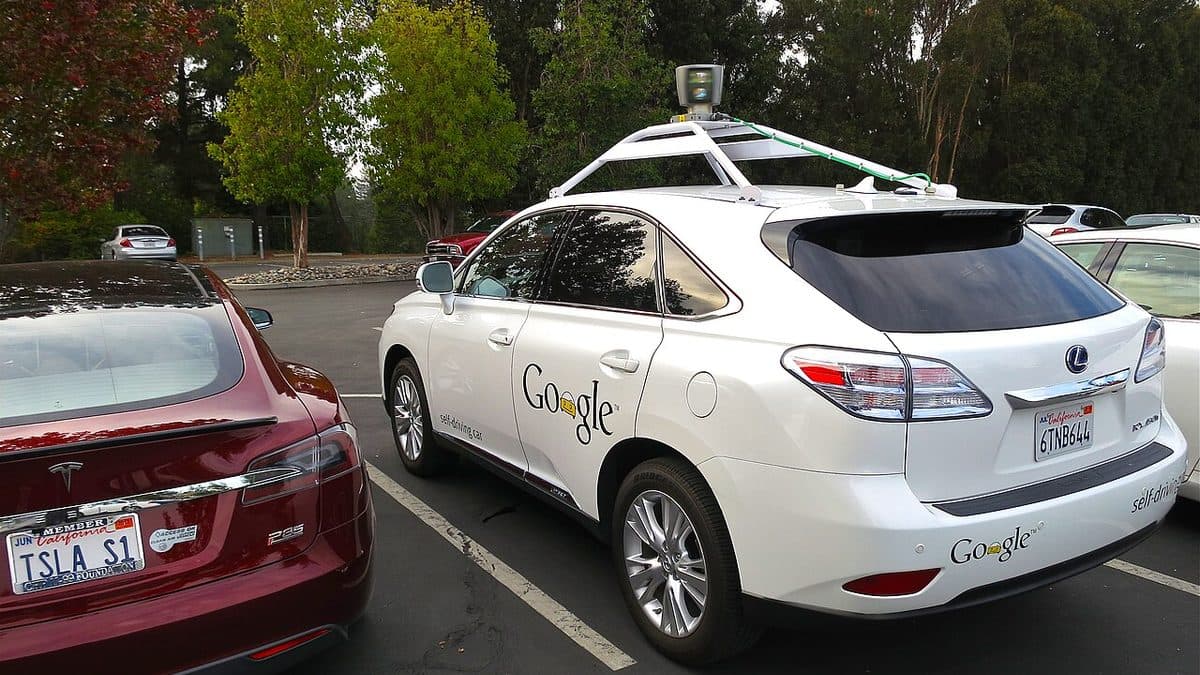
DiDi Autonomous Driving has launched fully driverless passenger service trials with its purpose-built R2 robotaxi across demonstration zones in Beijing and Guangzhou.
Driverless Service Trials Commence in Beijing and Guangzhou
DiDi Autonomous Driving has officially launched fully driverless passenger service trials for its next-generation Robotaxi R2 in designated demonstration zones located in Beijing and Guangzhou. Developed in close collaboration with GAC Aion, the dedicated electric vehicle manufacturing division of Guangzhou Automobile Group, the purpose-built autonomous vehicle has transitioned from closed validation and testing into regular bookable public rides accessible directly through the standard DiDi ride-hailing application [1][7].
The rollout represents a strategic step forward for DiDi Autonomous Driving, which operates under the leadership of co-founder and Chief Executive Officer Bob Bo Zhang. Zhang, who previously held a senior technology position at Baidu and conducted academic research on human-computer interaction and artificial intelligence at the Chinese Academy of Sciences, has directed DiDi's autonomous driving unit since it was established as an independent corporate entity in August 2019. The R2 program is structured to connect three core pillars of the autonomous mobility ecosystem that are frequently developed in isolation: proprietary full-stack autonomous driving software, mass automotive manufacturing capabilities, and an established, scaled passenger ride-dispatch network [7].
Engineering Specifications and Level 4 Architecture
From a hardware and computing standpoint, the Robotaxi R2 is engineered specifically for autonomous passenger transportation and designed for potential global deployment. The platform runs entirely on DiDi Autonomous Driving's proprietary Level 4 full-stack software and hardware architecture. To safely perceive, interpret, and navigate dense and unpredictable urban traffic environments, the vehicle is outfitted with a comprehensive sensor suite comprising 33 individual onboard sensors. These sensors feed continuous telemetry into a specialized triple-domain fusion central computing platform designed to optimize perception accuracy and handle intricate road scenarios across metropolitan testing corridors [1][7].
Safety engineering and system fault tolerance remain central to the platform's mechanical and digital architecture. The R2 incorporates an extensive multi-layer redundancy system covering both hardware and software operations, ensuring fail-operational reliability during automated driving tasks without a human operator present behind the steering controls. Furthermore, the underlying vehicle architecture is built to satisfy five-star crash and occupant protection benchmarks under both China New Car Assessment Program (C-NCAP) and European New Car Assessment Programme (Euro NCAP) safety rating standards [1][7].
In-Cabin Experience and Passenger-Centric Voice Controls
Because the vehicle is purpose-built to operate without an in-cabin human safety driver, the interior design of the R2 has been heavily reconfigured to cater exclusively to passenger comfort, usability, and intuitive human-machine interaction. The cabin layout maximizes rear-seat legroom and features high-angle adjustable seating. For information and entertainment throughout the journey, the passenger compartment is fitted with a 17.3-inch ceiling-mounted digital display screen [1][7].
Riders interact with the vehicle using an integrated artificial intelligence voice interaction system designed to eliminate the friction of unassisted travel. Through spoken natural language commands, passengers can verify their ride personal identification number (PIN) to initiate the trip, adjust the cabin air conditioning temperature and fan settings, roll vehicle windows up or down, and modify the interior ambient lighting themes. To enhance pre-trip passenger comfort and ensure interior air freshness, the R2 is programmed to lower its windows automatically to ventilate the cabin right before arriving at the designated passenger pickup location [1][7].
DiDi Autonomous Driving has indicated that several additional passenger-facing features will be introduced progressively as the service expands. Planned updates include the activation of an exterior interaction display screen to communicate status to waiting riders, options for passengers to preset their preferred cabin temperature and interior lighting colors directly within the app before entering the vehicle, and localized audio-visual locating mechanisms that deploy vehicle horn pulses and voice prompts to help users locate their assigned vehicle in busy curbside environments [1][7].
Operational Distribution and Shared Mobility Network Integration
The operational foundation of the R2 program relies heavily on the integration of autonomous fleets into DiDi Global's existing shared mobility infrastructure. DiDi Global's 2025 annual report previously noted that the company's autonomous driving technology would achieve long-term commercial viability by integrating directly with its established ride-hailing platform. In addition, the autonomous driving system leverages massive volumes of real-world traffic data generated across DiDi's shared mobility operations to train and refine its localization algorithms, predictive behavior models, and vehicle motion control systems [7].
The R2 platform was formally delivered in January 2026 and was immediately deployed for extensive public-road validation across major metropolitan centers including Beijing, Guangzhou, and Shenzhen prior to launching passenger trials. Fleet logistics, remote monitoring, and maintenance workflows are managed through Huiju Port, DiDi's full-process operational management center. Backed by its Level 4 software-hardware integration and Huiju Port's intelligent operational and maintenance framework, DiDi Autonomous Driving reports maintaining safe autonomous operations across its platforms for more than 2,200 consecutive days [1][7].
Safety Track Record, Huiju Port, and Commercialization Boundaries
Despite initiating passenger-facing trials, DiDi's deployment remains a tightly controlled demonstration pilot rather than an unrestricted commercial operation. The company has not published key operational data points, omitting details regarding the total number of R2 vehicles deployed, the precise geographic scope of the demonstration zones, passenger trip volumes, pricing or fare structures, accumulated autonomous miles, or the frequency of remote operator assistance and intervention events. As outlined in DiDi Global's 2025 regulatory filings, its autonomous driving operations had not achieved large-scale commercialization, and the organization has not disclosed its current autonomous driving research headcount [7].
Sources
Sources and evidence
- 1.
- 2.
Related articles

technology
MeitY Showcases DPI and AI at IMC 2026 on October 9
Discover the digital public infrastructure, AI language tools, and semiconductor capabilities showcased by MeitY at the India Mobile Congress 2026.
Buzz Insights Desk
2 min read
technology
Anthropic Launches Free OSS Scanner for Open-Source Security on October 8, 2026
Anthropic launched OSS Scanner on October 8, 2026, providing free, model-generated vulnerability scans and direct reports to eligible open-source projects.
Buzz Insights Desk
2 min read

technology
Python.org Releases Python 3.15 on October 9, 2026 With Lazy Imports and UTF-8 Default
Python.org officially released Python 3.15 on October 9, 2026, introducing explicit lazy imports, a default UTF-8 encoding, frozendict, and JIT performance gains.
Buzz Insights Desk
2 min read

technology
Cloudflare Launches Web Search API in Open Beta via AI Gateway on October 2, 2026
On October 2, 2026, Cloudflare launched its Web Search API in open beta via AI Gateway, partnering with Ceramic.ai, Exa, and Linkup to ground AI agents with live web data.
Buzz Insights Desk
2 min read

technology
Google Launches Gemini 4 Argon AI Model on September 30, 2026
On September 30, 2026, Google officially announced Gemini 4 Argon, its new frontier AI model featuring deep reasoning, a 1M token context window, and cybersecurity defense capabilities.
Buzz Insights Desk
2 min read
technology
OpenAI, Anthropic and Google Explore AI Standards Body on Sept 15, 2026
OpenAI, Anthropic and Google are working to create a self-regulatory AI standards body inspired by US financial regulators, as announced on Sept 15, 2026.
Buzz Insights Desk
3 min read