

EducationEditorially reviewed
Education Policy and Student Services Updates: UP Board APAAR Guidelines, AP Tribal Coaching Centre, and NTA Reform Consultation
Buzz Insights Desk6 min read
Reviewed by admin-deploy
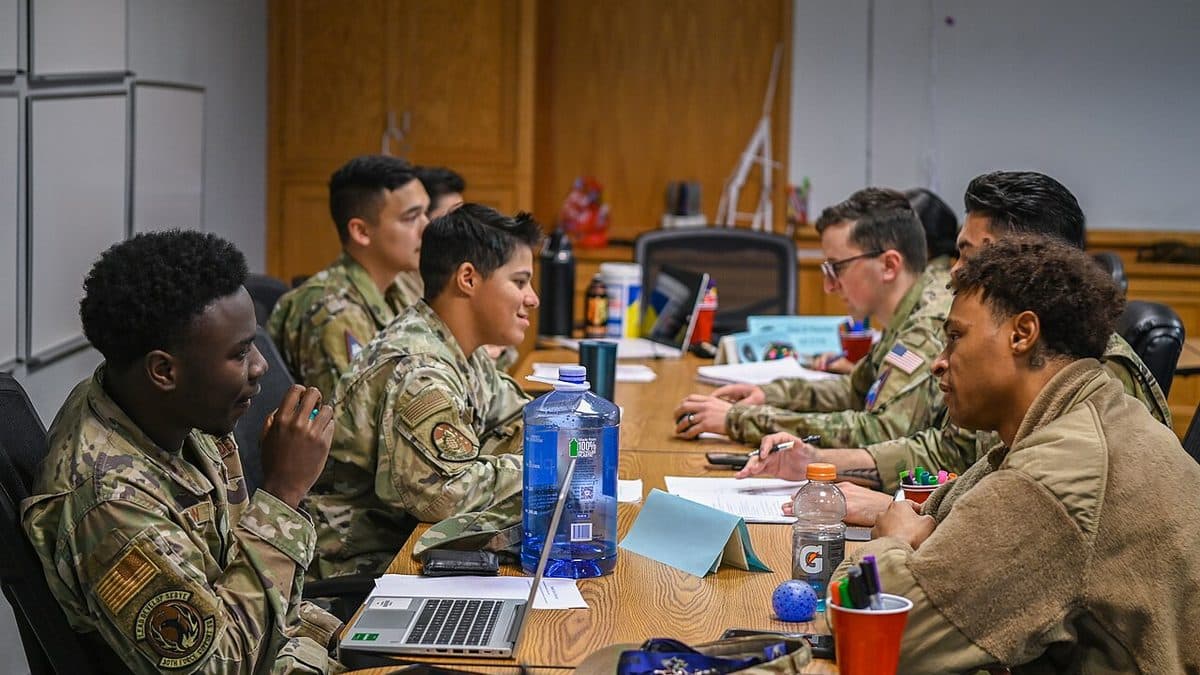
A comprehensive brief on recent educational developments across India, including UP Board's directives on 12-digit APAAR IDs and birth date verification, Andhra Pradesh's new Centre of Excellence for tribal students in Marikavalasa, and th…
UP Board Urges Adoption of 12-Digit APAAR IDs Across Secondary Schools
The Uttar Pradesh Board of High School and Intermediate Education has issued instructions to schools across the state to record students' 12-digit Automated Permanent Academic Account Registry (APAAR) IDs in advance registration and board examination documentation. The advisory covers advance registration forms for Class 9 and Class 11 as well as official examination forms for Class 10 and Class 12. State education officials noted that the integration of this unique digital identifier is designed to establish a transparent, unified, and verifiable academic trail throughout a learner's educational pathway, spanning from primary school to higher education institutions [2].
Although entering the APAAR ID is currently not mandatory for submitting Class 9 and Class 11 advance registration or Class 10 and Class 12 board examination forms, the board administration has instructed school principals and parents to take active measures to enroll every pupil. UP Board Secretary Bhagwati Singh explained that the APAAR initiative, operating under the Union Government's "One Nation, One Student ID" framework, assigns a lifetime digital identity to students, systematically connecting their academic credits, report cards, and official qualifying certificates [2].
Digital storage of academic credentials through DigiLocker serves to reduce the vulnerability of physical documents to loss, weathering, or destruction. Board Secretary Bhagwati Singh highlighted that verified academic records linked directly to an APAAR ID will streamline student access to state scholarships, government welfare entitlements, and higher education admissions. Generating the 12-digit identifier involves a straightforward procedure that requires explicit parental consent, and school administrators have been asked to assist families in completing the setup ahead of upcoming registration deadlines [2].
Mandatory Documentation Norms for Date of Birth Verification
In a parallel administrative directive, the UP Board has reinforced rules regarding the verification of students' birth dates recorded at the time of initial school admission. This policy enforcement follows multiple instances where candidates filed correction applications for birth dates printed on High School certificates, with underlying transfer certificates from primary or upper-primary schools presenting questionable age details recorded at the point of original enrollment [2].
Secretary Bhagwati Singh emphasized that the date of birth reflected on High School certificates and mark sheets serves as a definitive legal and academic credential that must be grounded in valid documentary evidence. Under the provisions of the Right of Children to Free and Compulsory Education (RTE) Act, 2009, the mandated age for admission into Class 1 is six years. The UP Board has instructed school authorities to rely primarily on official birth certificates when registering a child's birth date during their first admission [2].
To accommodate situations where a formal birth certificate cannot be produced, the board has authorized specific alternative verification records. Acceptable substitutes include institutional delivery records from hospitals, auxiliary nurse and midwife (ANM) records, local anganwadi register entries, and extracts from the village birth and death register. In the absence of these documents, a formal affidavit declaring the child's age submitted by a parent or guardian is permitted. Schools must also explicitly note in their official admission registers the exact evidentiary document used to verify each student's date of birth [2].
Andhra Pradesh Establishes Centre of Excellence for Tribal Students in Marikavalasa
In Andhra Pradesh, the State Government announced the establishment of a specialized Centre of Excellence (CoE) at the Residential School (RS-B) campus in Marikavalasa, Visakhapatnam. The facility has been created under the Andhra Pradesh Tribal Welfare Residential Educational Institutions Society (APTWREIS) to provide structured, intensive coaching for Scheduled Tribe (ST) students preparing for national competitive tests, specifically the National Eligibility-cum-Entrance Test (NEET) and the Indian Institutes of Technology Joint Entrance Examination (IIT-JEE) [4].
APTWREIS Secretary M. Gowthami inspected the Marikavalasa campus and described the launch as a historic measure sanctioned for the Tribal Welfare Department, modeled after existing Centres of Excellence run by the Backward Classes and Social Welfare Departments. The centre has an approved intake of 600 Intermediate students, divided equally into 300 boys and 300 girls selected via a merit-based evaluation. Private coaching organization Physics Wallah, Noida, was selected through a competitive request-for-proposal process, with 18 dedicated faculty members deputed to commence instructional sessions [4].
Marikavalasa was chosen for the CoE due to Visakhapatnam's status as an educational hub and its accessibility for students hailing from both agency and plain areas of North Andhra. The centre operates on a co-educational model patterned after Eklavya Model Residential Schools, equipped with segregated classrooms and dormitories for boys and girls, comprehensive CCTV surveillance, dedicated wardens, and reinforced security. Students previously enrolled at RS (B) Marikavalasa were relocated in a phased manner to other designated institutions with prior parental notice and bus transport [4].
Minister for Tribal Welfare and Women and Child Welfare Gummidi Sandhya Rani affirmed that the centre was established at the direction of Chief Minister N. Chandrababu Naidu to elevate academic performance and expand representation of ST students in elite national institutions [4].
Task Force Invites Stakeholder Input on Public Examination and NTA Reforms
At the national policy level, the High-Powered Task Force on Public Examination Reforms, chaired by Nandan Nilekani, has launched a broad public consultation inviting evidence and recommendations on examination governance, integrity, and security across tests conducted by bodies such as the National Testing Agency (NTA) [5].
Students, exam candidates, parents, educators, testing agencies, industry representatives, and civil society members can submit feedback until 13 September 2026. The consultation covers several core reform areas, including examination security, assessment methodologies, institutional accountability, computer-based testing infrastructure, transparency, grievance redressal, disability inclusion, and candidate mental well-being [5].
To ensure wide accessibility, submissions are being accepted in English, Hindi, and regional languages through a dedicated online portal, email, telephone, and WhatsApp. The task force is treating this exercise as an evidence-gathering framework to identify operational and structural failure points across test preparation, centre allocation, and candidate communication before delivering its final policy recommendations [5].
Sources
- UP Board pushes APAAR IDs for students, stresses birth record verification | Prayagraj News - The Times of India timesofindia.indiatimes.com
- Centre of Excellence for Tribal students in A.P.’s Marikavalasa to provide competitive exam coaching - The Hindu www.thehindu.com
- Nandan Nilekani-Led Task Force Seeks Public Input on NTA and Examination Reforms - The Policy Edge www.policyedge.in
Sources and evidence
- 1.
- 2.
- 3.
Related articles
education
Ministry of Education Sets October 31 NMMSS Scholarship Deadline for 2026-27 Academic Year
The Ministry of Education announced updated application deadlines and verification schedules for the National Means-cum-Merit Scholarship Scheme 2026-27, providing ₹12,000 annually.
Buzz Insights Desk
2 min read
education
Ministry of Education Reviews NMMSS Scholarship Implementation and October 31 Deadline
The Ministry of Education reviewed NMMSS scholarship implementation at a Bhopal workshop, emphasizing the October 31, 2026 application deadline on the National Scholarship Portal.
Buzz Insights Desk
2 min read
education
Ministry of Education Sets October 31 Deadline for 2026-27 NMMSS ₹12,000 Scholarships
The Union Ministry of Education highlights registration deadlines and verification workflows for the ₹12,000 annual NMMSS scholarship for 2026-27.
Buzz Insights Desk
2 min read
education
Ministry of Education Holds NMMSS Workshop in Bhopal; Sets Oct 31 Deadline
The Ministry of Education held a regional NMMSS workshop in Bhopal, emphasizing timely student registration by October 31 for the ₹12,000 annual scholarship.
Buzz Insights Desk
2 min read
education
Ministry of Education Sets October 31 Deadline for NMMSS 2026-27 Scholarship Registration
The Union Ministry of Education has announced key verification deadlines and an October 31, 2026 registration target for the NMMSS ₹12,000 annual scholarship.
Buzz Insights Desk
2 min read
education
Education Ministry Sets Oct 31 Deadline for NMMSS 2026-27 Scholarship Registrations
The Ministry of Education reviewed NMMSS 2026-27 implementation in Bhopal, setting an October 31 registration deadline and ₹12,000 annual scholarship terms.
Buzz Insights Desk
2 min read