

EducationEditorially reviewed
IIT Madras-Incubated Bodhan AI and AI4Bharat Launch Sovereign Indian-Language AI Models for Classrooms
Buzz Insights Desk6 min read
Reviewed by Moksha
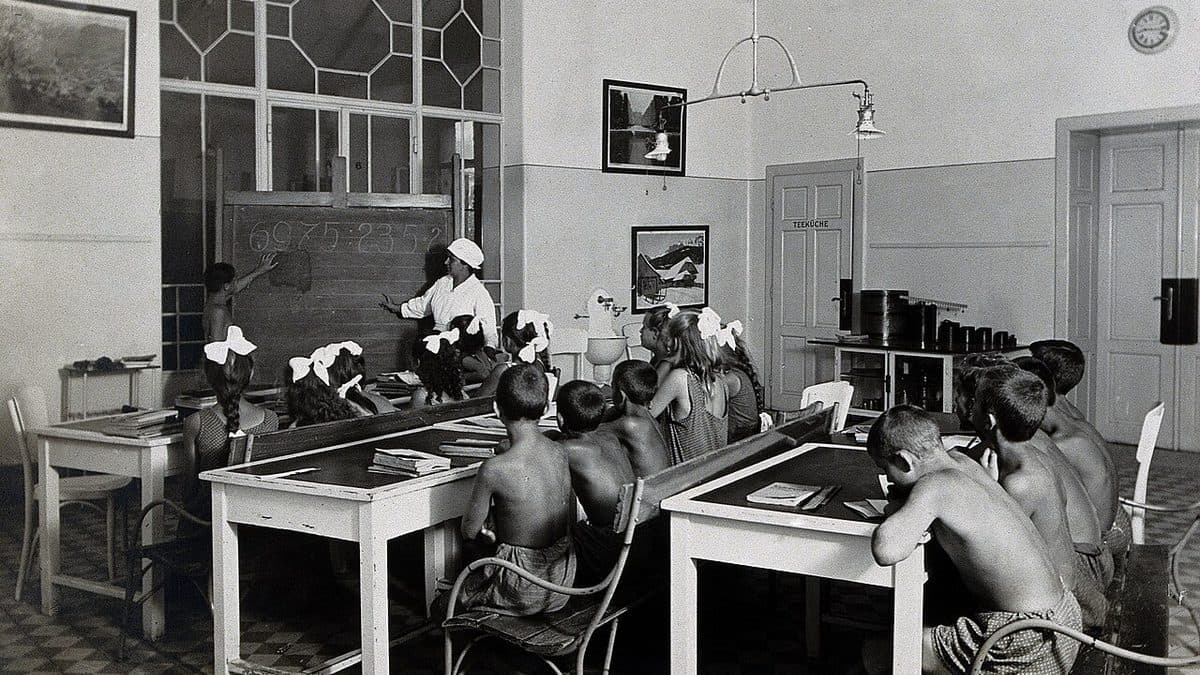
Bodhan AI and AI4Bharat at IIT Madras have launched four foundational AI models covering up to 27 Indian languages, introducing dedicated bots for students and teachers alongside a large-scale deployment in Assam.
Foundational AI Architecture for Indian Classrooms
Bodhan AI, established as a Centre of Excellence in AI for Education incubated within the Indian Institute of Technology Madras (IIT Madras) and supported by the Union Ministry of Education, has officially launched four foundational artificial intelligence models in partnership with AI4Bharat, an advanced research laboratory at IIT Madras [1][4]. This collaborative initiative addresses long-standing linguistic hurdles in the Indian academic landscape by building dedicated open architectures for local languages [1][4]. Rather than requiring students and educators to interact exclusively in English, the new suite of models is tailored to allow school students to engage with core learning materials and receive academic support directly in regional vernaculars [4]. The project serves as an integral pillar of the Bharat EduAI Stack, an overarching concept developed to establish sovereign digital public infrastructure specifically designed to cater to the nation's diverse educational requirements across schools and public institutions [1][4].
Technical Capabilities and Linguistic Scope Across Four Core Models
The suite introduced by Bodhan AI and AI4Bharat concentrates on four core technological areas essential for classroom interaction: speech recognition, speech generation, machine translation, and optical character recognition (OCR) [1][4]. Across these domains, the models provide extensive coverage of India's linguistic landscape [4]. The automatic speech recognition model has been developed to support 27 languages, enabling students to interact verbally with digital interfaces rather than relying solely on typed inputs [4]. In tandem, the optical character recognition model and the text-to-speech generation model support 23 languages each, which enables software systems to transcribe handwritten student work and synthesize spoken answers [4]. Completing the foundational quartet, the machine translation engine spans 22 Indian languages, allowing educational content, study resources, and academic material to be converted across vernacular languages smoothly [4].
Classroom Tools: Student Tutor Bot and Teacher Assistant Bot
To bring these underlying architectures directly into educational practice, Bodhan AI has unveiled two specialized applications: a Student Tutor Bot and a Teacher Assistant Bot [4]. Designed specifically for pupils in Classes 6 through 12, the Student Tutor Bot aligns its knowledge base with curricula established by the National Council of Educational Research and Training (NCERT) and State Councils of Educational Research and Training (SCERT) [4]. Through either voice or text input across 22 Indian languages, students can seek answers to academic questions, work through guided problem-solving sequences, review explanatory concepts and examples, and access built-in tools for mathematical calculations and diagram generation [4].
Alongside the student interface, the Teacher Assistant Bot operates as a comprehensive productivity tool to support educators in managing classroom instruction [4]. Teachers can utilize the tool to automatically formulate lesson plans, draft homework assignments, build quizzes, prepare worksheets, and assemble revision materials tailored to specific grade levels, subject areas, topics, and difficulty requirements [4]. Additionally, teachers are able to upload student work directly into the system for evaluation against set benchmarks, while retaining the authority to review, adjust, regenerate, or reject any AI-generated output [4].
Open Distribution Model and Sovereign Digital Public Infrastructure
A central dimension of the release by Bodhan AI and AI4Bharat is its accessibility framework, which avoids closed proprietary formats in favor of open distribution [1][4]. The foundational models are released as open-weight Digital Public Goods and are accessible through hosted Application Programming Interfaces (APIs) built upon sovereign digital infrastructure [1][4]. This architecture enables public sector bodies, state education departments, and government institutions to deploy multilingual artificial intelligence capabilities without depending on foreign infrastructure or third-party proprietary software [1][4]. Concurrently, commercial EdTech enterprises can leverage the hosted APIs to integrate Indic language tools into their existing products without having to undertake the massive capital and technical investment required to train foundational models from scratch [1].
Ground-Level State Implementation: The Assam Teacher Training Pact
The operational rollout of these capabilities is already expanding into state public school systems, as demonstrated by an initiative in Assam [2]. Samagra Shiksha, Assam has signed formal agreements with six partner organizations, including IIT Madras – Bodhan AI, Google AI, LEHS – Wadhwani AI, Educate Girls, EkStep – AXL, and Canva Education [2]. According to Assam Education Minister Ranoj Pegu, these partnerships aim to create an inclusive, technology-enabled, learner-centric educational framework [2]. Within this multilateral initiative, the partnership with IIT Madras – Bodhan AI specifically focuses on developing artificial intelligence proficiency among educators, targeting the training of approximately one lakh teachers handling Classes 6 to 12 across the state by May 2027 [2].
Complementing Bodhan AI's teacher training objective, the remaining agreements address critical systemic priorities in the state's school system [2]. Google AI provides training in digital skills and AI-enabled instructional tools; LEHS – Wadhwani AI deploys AI-based reading fluency assessments for foundational literacy; EkStep – AXL offers AI-assisted foundational learning; Canva Education promotes digital creativity and design thinking; and Educate Girls focuses on identifying, enrolling, and retaining out-of-school adolescent girls [2].
Sources
- IITM-incubated centre launches AI models in Indian languages - The Hindu www.thehindu.com
- AI-abled training for teachers to help assess literacy & personalise education, govt inks 6 pacts | Guwahati News - The Times of India timesofindia.indiatimes.com
- IIT Madras’ Bodhan AI launches AI tutor for Classes 6-12 in 22 Indian languages - India Today www.indiatoday.in
Sources and evidence
- 1.
- 2.
- 3.
Related articles
education
Ministry of Education Sets October 31 NMMSS Scholarship Deadline for 2026-27 Academic Year
The Ministry of Education announced updated application deadlines and verification schedules for the National Means-cum-Merit Scholarship Scheme 2026-27, providing ₹12,000 annually.
Buzz Insights Desk
2 min read
education
Ministry of Education Reviews NMMSS Scholarship Implementation and October 31 Deadline
The Ministry of Education reviewed NMMSS scholarship implementation at a Bhopal workshop, emphasizing the October 31, 2026 application deadline on the National Scholarship Portal.
Buzz Insights Desk
2 min read
education
Ministry of Education Sets October 31 Deadline for 2026-27 NMMSS ₹12,000 Scholarships
The Union Ministry of Education highlights registration deadlines and verification workflows for the ₹12,000 annual NMMSS scholarship for 2026-27.
Buzz Insights Desk
2 min read
education
Ministry of Education Holds NMMSS Workshop in Bhopal; Sets Oct 31 Deadline
The Ministry of Education held a regional NMMSS workshop in Bhopal, emphasizing timely student registration by October 31 for the ₹12,000 annual scholarship.
Buzz Insights Desk
2 min read
education
Ministry of Education Sets October 31 Deadline for NMMSS 2026-27 Scholarship Registration
The Union Ministry of Education has announced key verification deadlines and an October 31, 2026 registration target for the NMMSS ₹12,000 annual scholarship.
Buzz Insights Desk
2 min read
education
Education Ministry Sets Oct 31 Deadline for NMMSS 2026-27 Scholarship Registrations
The Ministry of Education reviewed NMMSS 2026-27 implementation in Bhopal, setting an October 31 registration deadline and ₹12,000 annual scholarship terms.
Buzz Insights Desk
2 min read