

EducationEditorially reviewed
UP Board Advances APAAR ID Rollout, Admission Birth Verification, and Learning Enhancement Initiatives
Buzz Insights Desk6 min read
Reviewed by admin-deploy
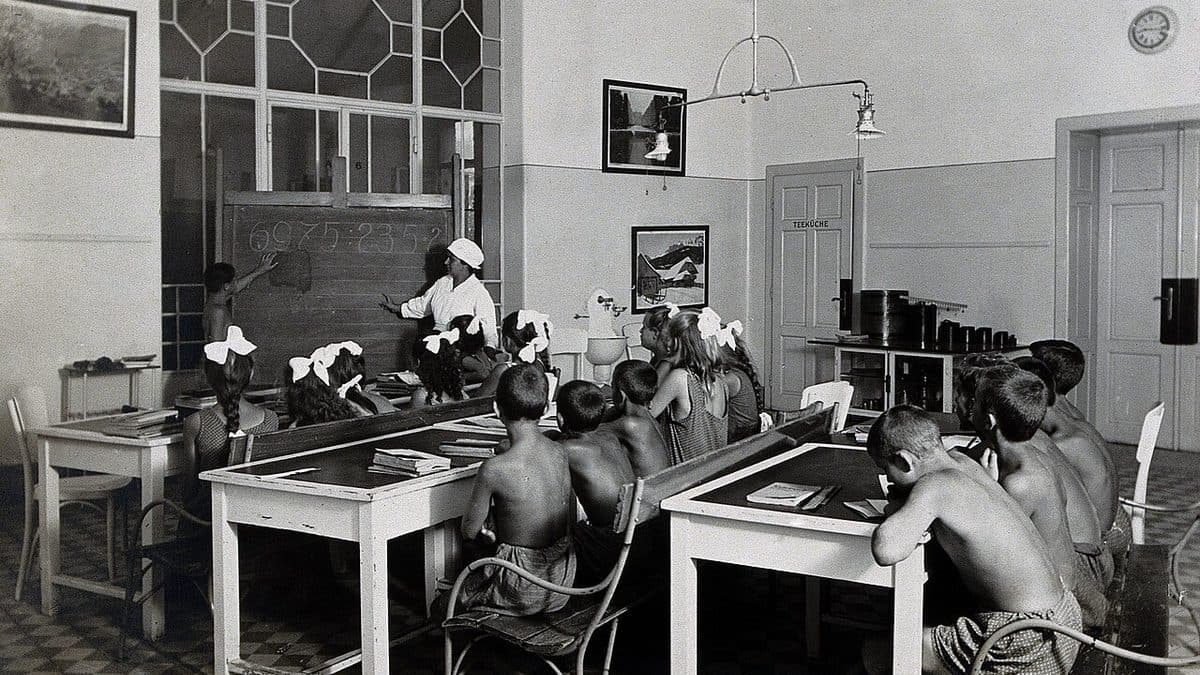
An analysis of recent educational directives in Uttar Pradesh covering student APAAR ID registration, strict date-of-birth verification rules for admissions, and targeted Learning Enhancement Programmes.
Overview of Recent State and National School Education Reforms
Educational authorities across India and state education boards are advancing comprehensive administrative and pedagogical measures designed to strengthen student tracking, improve record verification, and address learning deficiencies in classrooms [2][3]. In Uttar Pradesh, recent policy directives have placed significant emphasis on modernising academic administration through the adoption of unique student identifiers and stricter documentary compliance for school admissions [2]. Concurrently, national bodies such as the National Council of Educational Research and Training (NCERT) emphasize the necessity of equitable, accessible education and flexible learning resources tailored to diverse student needs [1].
Digital Identity Integration: Rollout of APAAR IDs in Uttar Pradesh
At the state level, the Uttar Pradesh Board of High School and Intermediate Education has instructed schools across the state to facilitate the recording of 12-digit Automated Permanent Academic Account Registry (APAAR) IDs in student registration and examination paperwork [2]. According to directives issued from Prayagraj, school administrations are urged to collect and enter these unique 12-digit identifiers during advance registration for Classes 9 and 11, as well as in the final examination application forms for Classes 10 and 12 [2].
Although providing the APAAR ID is not strictly mandatory for students completing advance registration for Classes 9 and 11 or filling examination forms for Classes 10 and 12, the UP Board has strongly advised institutional heads and parents to complete student registrations [2]. Board secretary Bhagwati Singh highlighted that APAAR, framed under the national “One Nation, One Student ID” vision, establishes a permanent digital identity that seamlessly connects a student's academic credits, report cards, and certificates [2]. Through this digital infrastructure, crucial records such as mark sheets and transfer certificates can be securely stored and accessed via DigiLocker, mitigating the danger of physical document loss or damage [2]. Secretary Singh further indicated that the APAAR ID simplifies student access to educational facilities, government welfare schemes, and scholarships based on verified administrative data, while noting that generating the ID is an uncomplicated process contingent on parental consent [2].
Standardising Age Criteria and Birth Verification at School Admission
In parallel with digital identification initiatives, the UP Board has established rigorous verification standards regarding the recording of dates of birth during initial school admissions [2]. This intervention addresses administrative difficulties arising from subsequent applications submitted to correct dates of birth on High School certificates, where previous transfer certificates issued by primary or upper-primary institutions raised contradictions regarding the child's recorded age at entry [2]. Emphasizing that the date of birth appearing on High School certificates and mark sheets is a foundational legal and academic record, board secretary Bhagwati Singh mandated that all entries must be grounded in verified documentary evidence [2].
The board reiterated that under the provisions of the Right to Education (RTE) Act, 2009, the prescribed minimum age for admission into Class 1 is six years [2]. School authorities are instructed to primarily rely on an official birth certificate when recording a child's date of birth at initial entry [2]. Where a formal birth certificate is unavailable, the board permits specific alternate documents, including hospital or auxiliary nurse and midwife (ANM) records, anganwadi records, extracts from village birth and death registers, or a formal declaration of age submitted by a parent or guardian via an affidavit [2]. Educational institutions are further required to maintain transparent records by explicitly documenting the specific evidentiary paper used to establish each student's date of birth upon admission [2].
Targeted Interventions for Foundational Learning: Science and Math Circles
Alongside administrative and identity reforms, the Uttar Pradesh government is deploying structured pedagogical strategies to remediate learning gaps in upper-primary schooling [3]. Under the Learning Enhancement Programme (LEP) spearheaded by the Director General of School Education (DGSE) Monika Rani, students enrolled in Classes VI through VIII will participate in targeted experiential learning mechanisms called 'science circle' and 'math circle' [3]. The 'science circle' initiative focuses on fostering scientific temper through hands-on experiments, scientific model preparation, observation-centric exercises, and structured discussions [3]. Meanwhile, the 'math circle' is designed to build conceptual clarity and alleviate subject anxiety through activity-oriented learning, including mathematical puzzles, problem-solving games, and practical demonstrations [3].
To measure and sustain learning gains, the Learning Enhancement Programme mandates systematic baseline and endline assessments for students in Classes VI to VIII to identify specific learning deficiencies across mathematics, science, and languages [3]. Remedial classes will be conducted based on assessment outcomes to ensure students achieve grade-level competencies [3]. Schools are also directed to enrich reading corners and institutional libraries with age-appropriate literature, conducting regular book discussions, reading sessions, and independent reading exercises to enhance comprehension, vocabulary, and foundational literacy [3]. Language pedagogy is further reinforced using English Language Teaching Institute (ELTI) grammar books and digital learning videos created by ELTI Prayagraj [3].
Capacity Building, Teacher Support, and National Accessibility Frameworks
To support effective classroom delivery, the state intervention incorporates systematic teacher capacity-building measures [3]. Basic education officers have been directed to organize cluster-level meetings where educators share best practices, examine instructional challenges, and create innovative teaching-learning materials [3]. Participating teachers are required to maintain reflective diaries and develop structured lesson plans tailored to learners needing additional academic reinforcement [3]. These state-level efforts align with the broader national agenda set out by NCERT, which underscores that equitable education must address the varied needs of Socio-Economically Disadvantaged Groups (SEDGs) as well as general learners by delivering personalized adaptive learning resources across multiple accessible formats and flexible delivery channels [1].
Sources
- NCERT ncert.nic.in
- UP Board pushes APAAR IDs for students, stresses birth record verification | Prayagraj News - The Times of India timesofindia.indiatimes.com
- UP circles in on learning gaps to ramp up students’ grade-level skills | Lucknow News - The Times of India timesofindia.indiatimes.com
Sources and evidence
- 1.NCERT
ncert.nic.in
- 2.
- 3.UP circles in on learning gaps to ramp up students’ grade-level skills | Lucknow News - The Times of India
timesofindia.indiatimes.com
Related articles
education
Ministry Extends NMMSS 2026-27 Deadline to Oct 31
The Ministry of Education extended the NMMSS 2026-27 scholarship application deadline to October 31, 2026, updating verification milestones.
Buzz Insights Desk
2 min read
education
Satin Finserv Launches Sankalp Climate Challenge for UG and PG Students with October 11 Deadline
Satin Finserv has launched Sankalp Climate Edition, inviting undergraduate and postgraduate students across India to submit climate solutions by October 11.
Buzz Insights Desk
4 min read
education
DU Extends PhD Admission 2026 Deadline to September 16 for 4-Year UG Students
The University of Delhi has extended its PhD admission 2026 registration deadline to September 16 for 4-year undergraduate degree holders.
Buzz Insights Desk
4 min read
education
Female Higher Education Enrolment Hits 2.23 Crore in 2023-24
Union Education Minister Dharmendra Pradhan informed the Lok Sabha that female higher education enrolment rose to 2.23 crore in 2023-24.
Buzz Insights Desk
3 min read
education
Ministry of Education Extends NMMS Scholarship 2026-27 Deadline to September 30
The Ministry of Education extends the NMMS scholarship 2026-27 application deadline to September 30, 2026, offering crucial relief for eligible students.
Buzz Insights Desk
3 min read
education
Ladakh Deploys CBSE Team for Month-Long Teaching Drive on Sept 14, 2026
UT Ladakh launched a month-long CBSE expert teaching programme on September 14, 2026, deploying academic officials across Kargil zones.
Buzz Insights Desk
3 min read