

EducationEditorially reviewed
Uttar Pradesh Introduces Learning Enhancement Programme with Science and Math Circles for Upper Primary Students
Buzz Insights Desk6 min read
Reviewed by admin-deploy
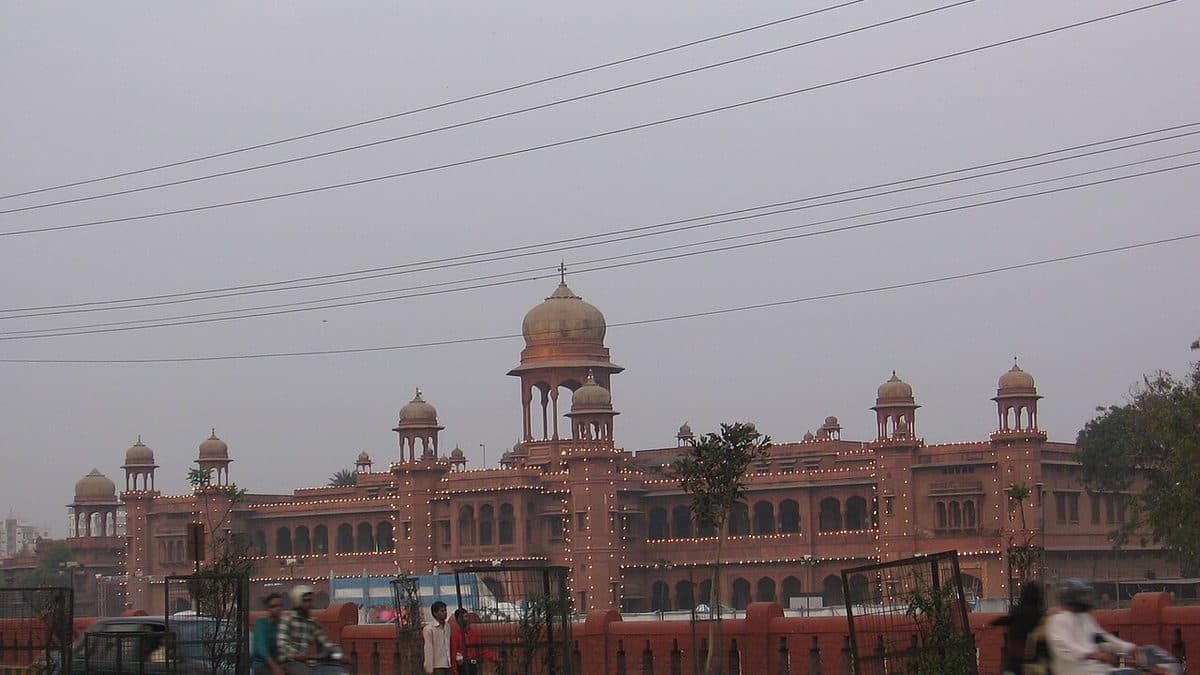
The Uttar Pradesh government has launched a comprehensive Learning Enhancement Programme featuring science and math circles, diagnostic assessments, and reading initiatives for upper primary students.
Introduction of Learning Enhancement Programme in Uttar Pradesh
The Government of Uttar Pradesh has introduced a comprehensive Learning Enhancement Programme (LEP) designed specifically to address post-primary learning gaps and strengthen grade-level competencies among students enrolled in classes VI to VIII across government schools [2]. Through this initiative, the state basic education administration is implementing targeted interventions aimed at transforming conventional classroom teaching into interactive and practical learning environments [2].
Directives for executing the programme have been issued to all basic education officers by Director General of School Education (DGSE) Monika Rani [2]. The framework focuses on tackling subject-specific difficulties early in upper primary schooling, ensuring students do not carry foundational deficits into higher secondary education [2]. The policy reflects broader national imperatives outlined in foundational educational reforms, which emphasize transitioning away from rote methods toward learner-centric, inquiry-based pedagogical frameworks [1][2].
Structure and Objectives of Science and Math Circles
Central to the new Learning Enhancement Programme is the launch of two specialized pedagogical activities: the 'science circle' and the 'math circle' [2]. These circles have been conceptualized to move classroom engagement beyond rote memorization and textbook-heavy instruction toward hands-on participation [2].
Under the 'science circle' framework, the primary goal is to encourage a strong scientific temper among middle school learners [2]. Students participate in structured hands-on experiments, model preparation, observation-based activities, and guided classroom discussions [2]. By directly observing scientific phenomena and manipulating apparatus, learners are guided to understand theoretical principles through empirical evidence [2]. This structural shift closely matches national policy principles that call for experiential, inquiry-driven, discovery-oriented, and holistic pedagogical practices [1][2].
Complementing the science initiative, the 'math circle' is specifically targeted at improving conceptual clarity and actively reducing mathematics anxiety among young learners [2]. The math circles utilize activity-based learning approaches, deploying mathematical puzzles, educational games, structured problem-solving exercises, and practical demonstrations [2]. By demystifying abstract numeric and geometric principles through playful, low-stress applications, the initiative seeks to build foundational confidence in middle school mathematics [2].
Diagnostic Assessment and Structured Remediation
To ensure that interventions are grounded in measurable student outcomes, DGSE Monika Rani directed that all enrolled students in classes VI through VIII undergo systematic assessments under the LEP framework [2]. These assessments are conducted at two critical junctures: at the beginning of the intervention cycle to establish baseline competencies and identify specific learning gaps, and at the end of the cycle to measure academic progress [2].
Based on the diagnostic data collected during the initial baseline evaluations, schools are required to organize targeted remedial classes [2]. These remedial sessions focus on helping students attain expected grade-level learning outcomes across core subject areas, with an emphasis on mathematics, science, and languages [2]. This dual-assessment approach ensures that instructional remediation remains targeted to individual learning needs rather than relying on generalized instruction [2].
Such systematic identification and targeted bridging of learning outcome deficits align with national policy directives on closing the gap between actual learning outcomes and curricular standards across elementary education [1][2].
Literacy Strengthening and ELTI Digital Resources
Recognizing that foundational language comprehension is vital for academic progress across all subjects, the Learning Enhancement Programme incorporates structured measures to enhance literacy, grammar, and communication skills [2]. Under the programme guidelines, government schools are instructed to strengthen their libraries and classroom reading corners with age-appropriate books [2].
To foster lasting reading habits, schools will organize regular reading sessions, dedicated book discussions, and independent reading activities [2]. These activities are explicitly aimed at building student reading comprehension, expanding vocabulary, and raising overall literacy levels across upper primary cohorts [2].
In addition to general literacy activities, language instruction is being standardized through instructional materials developed by the English Language Teaching Institute (ELTI), Prayagraj [2]. Students will receive direct support through the ELTI grammar book along with curated digital learning videos produced by ELTI [2]. Teachers are tasked with integrating these specialized print and digital resources into structured classroom activities to improve student grammar, spoken communication, and expressive language skills [2].
Teacher Capacity Building and Accountability
The effective execution of the Learning Enhancement Programme depends heavily on continuous teacher development and systematic classroom preparation [2]. In her directives to basic education officers, DGSE Monika Rani highlighted teacher capacity-building as a core pillar of the reform [2].
Educational administrators have been instructed to conduct regular cluster-level meetings for teachers [2]. These cluster meetings serve as collaborative platforms where educators can share best practices, discuss specific classroom learning challenges, and collectively develop innovative teaching-learning materials (TLM) tailored to their local contexts [2].
Furthermore, individual teacher accountability and documentation are embedded within the programme [2]. Teachers are required to maintain dedicated teaching diaries and design focused lesson plans specifically customized for students who have been identified as needing additional remedial support [2]. This documentation ensures continuous monitoring of slow-paced learners and provides structured pedagogical roadmaps for remedial instruction [2].
Alignment with National Pedagogical Goals
The measures initiated under Uttar Pradesh's Learning Enhancement Programme reflect the core principles set forth in India's National Education Policy (NEP) 2020 [1][2]. The national policy framework underscores that education must build rational thought, compassion, scientific temper, and creative problem-solving skills, while ensuring universal foundational competencies [1].
By integrating practical circles, targeted diagnostic evaluations, enriched reading corners, and continuous teacher collaboration, the state's initiative demonstrates how regional administrative systems can implement systemic interventions to elevate learning outcomes in public elementary schools [1][2].
Sources
- National Education Policy 2020 static.pib.gov.in
- UP circles in on learning gaps to ramp up students’ grade-level skills | Lucknow News - The Times of India timesofindia.indiatimes.com
Sources and evidence
- 1.National Education Policy 2020
static.pib.gov.in · Primary source
- 2.UP circles in on learning gaps to ramp up students’ grade-level skills | Lucknow News - The Times of India
timesofindia.indiatimes.com
Related articles
education
Ministry of Education Sets October 31 NMMSS Scholarship Deadline for 2026-27 Academic Year
The Ministry of Education announced updated application deadlines and verification schedules for the National Means-cum-Merit Scholarship Scheme 2026-27, providing ₹12,000 annually.
Buzz Insights Desk
2 min read
education
Ministry of Education Reviews NMMSS Scholarship Implementation and October 31 Deadline
The Ministry of Education reviewed NMMSS scholarship implementation at a Bhopal workshop, emphasizing the October 31, 2026 application deadline on the National Scholarship Portal.
Buzz Insights Desk
2 min read
education
Ministry of Education Sets October 31 Deadline for 2026-27 NMMSS ₹12,000 Scholarships
The Union Ministry of Education highlights registration deadlines and verification workflows for the ₹12,000 annual NMMSS scholarship for 2026-27.
Buzz Insights Desk
2 min read
education
Ministry of Education Holds NMMSS Workshop in Bhopal; Sets Oct 31 Deadline
The Ministry of Education held a regional NMMSS workshop in Bhopal, emphasizing timely student registration by October 31 for the ₹12,000 annual scholarship.
Buzz Insights Desk
2 min read
education
Ministry of Education Sets October 31 Deadline for NMMSS 2026-27 Scholarship Registration
The Union Ministry of Education has announced key verification deadlines and an October 31, 2026 registration target for the NMMSS ₹12,000 annual scholarship.
Buzz Insights Desk
2 min read
education
Education Ministry Sets Oct 31 Deadline for NMMSS 2026-27 Scholarship Registrations
The Ministry of Education reviewed NMMSS 2026-27 implementation in Bhopal, setting an October 31 registration deadline and ₹12,000 annual scholarship terms.
Buzz Insights Desk
2 min read