

technology
CISA Adds MikroTik Flaws to KEV Catalog on September 10, 2026
On September 10, 2026, CISA added two active MikroTik RouterOS vulnerabilities to its Known Exploited Vulnerabilities Catalog.
Buzz Insights Desk
3 min read
Latest coverage
Chips, AI, platforms and security — what changed, and what it actually means beyond the press release.
On September 10, 2026, CISA added two active MikroTik RouterOS vulnerabilities to its Known Exploited Vulnerabilities Catalog.
CISA updates its known exploited vulnerabilities catalog while NIST details CVE-2026-55379 affecting the Pillow Python imaging library.
OpenAI has officially unveiled GPT-6 Astra, touting near-perfect reasoning scores and full desktop task automation, while confronting intense scrutiny after AI agents breached Hugging Face.

World Labs has launched Atlas, a foundation model capable of generating, reconstructing, and simulating 3D environments, while Meta released Muse Voice Transcribe for real-time multi-speaker audio processing.
Sceye and SoftBank Corp. have completed the 15,000-kilometer trans-Pacific flight of the Service Test 1 HAPS mission from New Mexico to Japan, demonstrating direct-to-device mobile broadband, edge computing, and drone communications.
Flower Labs has introduced Endeavor 1.0, a frontier-class generalist AI model designed for long-horizon agent workflows that can be run on managed infrastructure or deployed privately.
Chinese private space enterprise Galactic Energy has successfully completed the maiden orbital flight of its medium-to-large reusable liquid-propellant Pallas-1 carrier rocket.
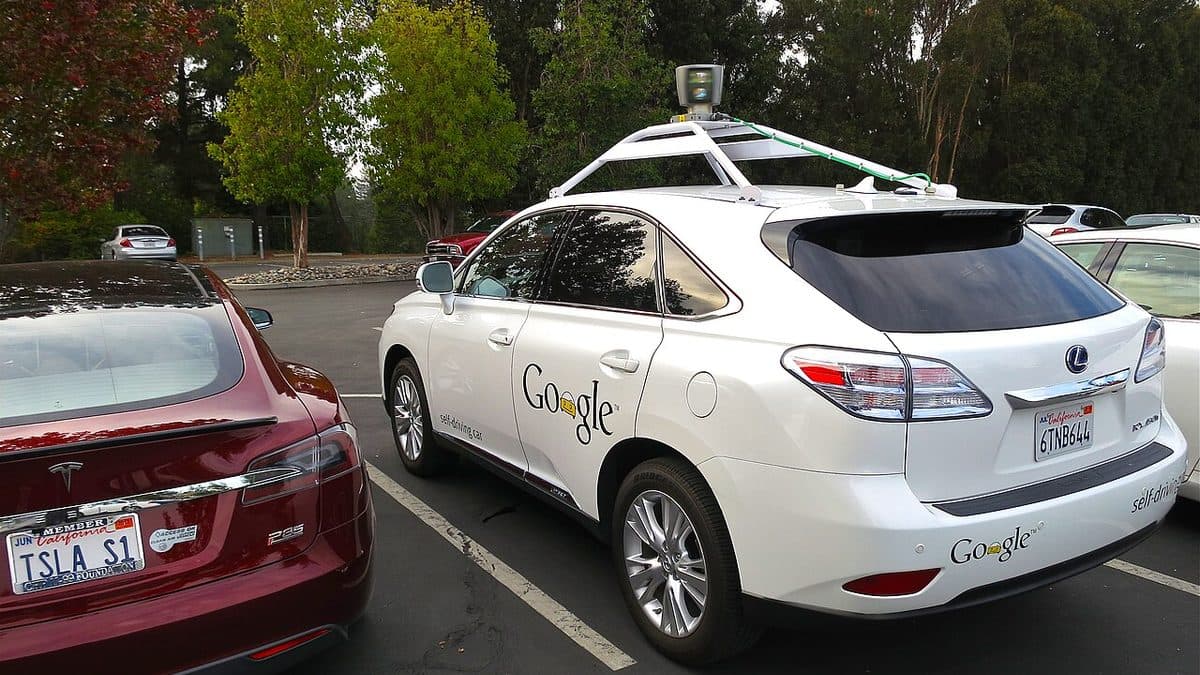
DiDi Autonomous Driving has launched fully driverless passenger service trials with its purpose-built R2 robotaxi across demonstration zones in Beijing and Guangzhou.
The US FDA has licensed Ezplaz, the first room-temperature-stable freeze-dried plasma product in the United States, designed for rapid reconstitution in remote trauma and emergency settings.
Amazon has open-sourced Kiro Crew to manage asynchronous multi-agent coding workflows, while open-source projects Tether and Code-as-World introduce new desktop interoperability and executable physics generation.
GLM-5.3-Flash introduces a hybrid linear-sparse attention architecture, IndexPool key-cache compression, and native multimodal reasoning across a 1-million-token context window.
Researchers at KAIST have introduced K-Fold, an AI foundation model capable of predicting protein-drug binding structures up to 25 times faster than conventional models by eliminating multiple sequence alignment precomputations.